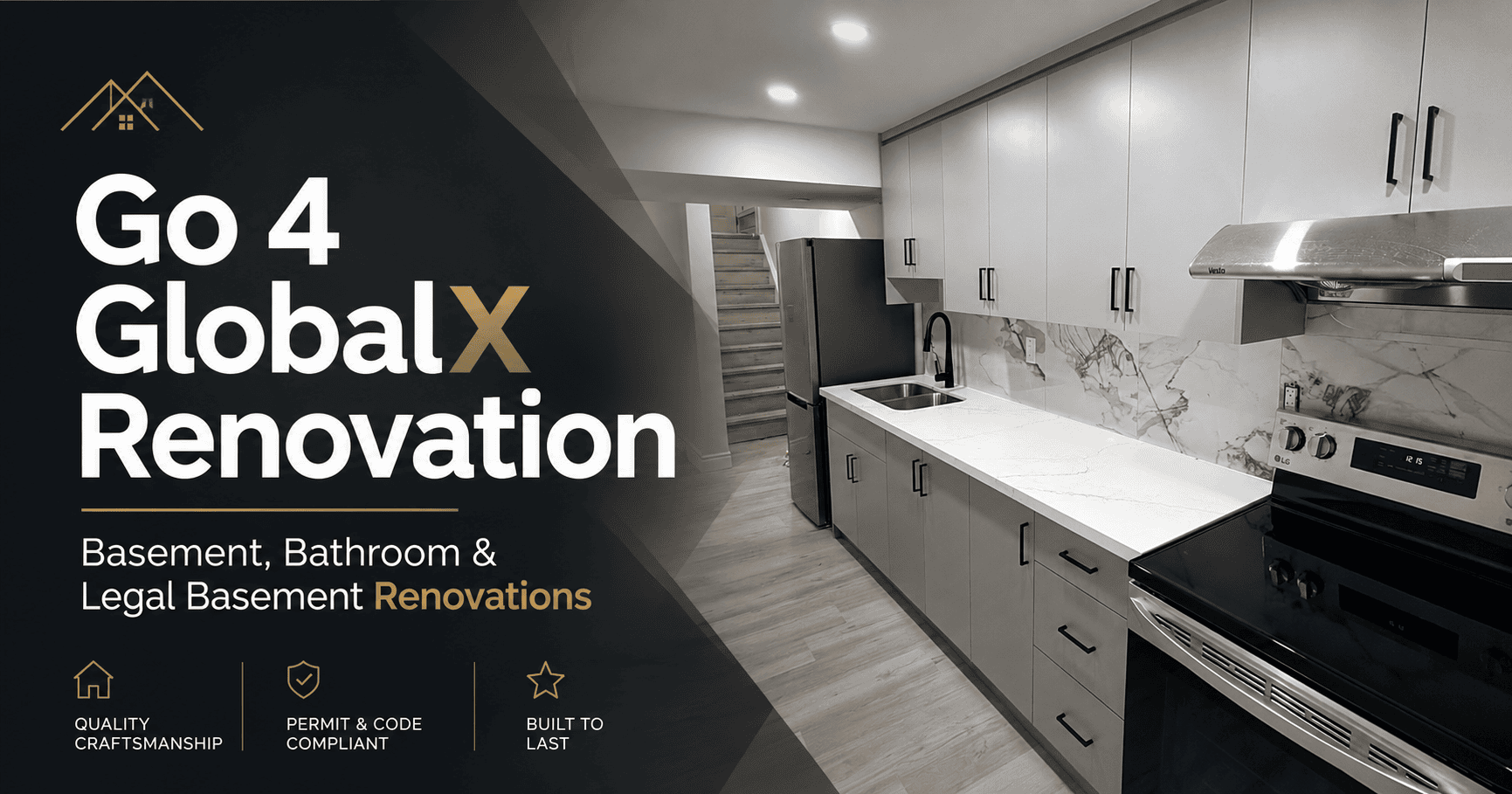
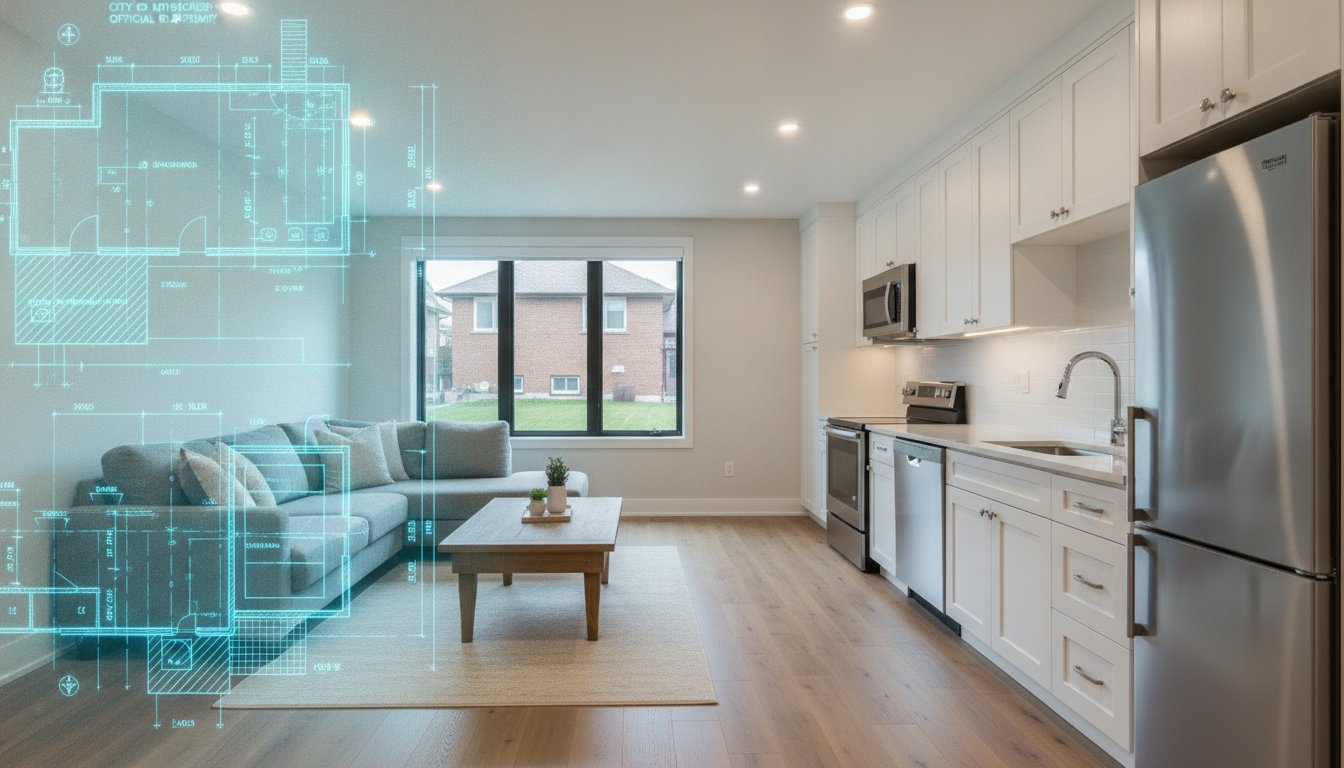
Did you know that an unpermitted basement suite in Kitchener is more than just a legal headache; it's a significant financial liability that could result in heavy city fines or a forced decommissioning? You've likely felt the anxiety that comes with trying to decode complex fire separation rules or egress window requirements. It's natural to worry about hiring a contractor who might cut corners on the very permits that protect your investment. We believe in doing things correctly the first time to ensure your family's safety and your property's long-term value.
In this 2026 guide, you'll learn exactly how to execute a legal basement renovation Kitchener homeowners can rely on for both safety and high rental yields. We'll walk you through the latest Ontario Building Code amendments, including the new smoke-tight gypsum barrier standards and mandatory radon rough-ins. This overview provides a clear, step-by-step roadmap to converting your basement into a fully compliant secondary suite while avoiding the costly permit mistakes that often lead to project delays and unnecessary stress.
Key Takeaways
- Understand the critical legal distinction between a standard finished basement and a registered secondary dwelling unit under the Planning Act.
- Navigate the essential Ontario Building Code requirements for a legal basement renovation Kitchener homeowners must follow, including ceiling heights and fire separation.
- Identify specific City of Kitchener zoning bylaw requirements regarding mandatory off-street parking and separate entrance regulations.
- Learn why investing in full legal compliance offers a significantly higher return on investment and protects your property value over the long term.
- Discover how a permit-first approach ensures your project meets all municipal codes in the Waterloo Region while avoiding the risk of city fines.
Understanding Legal Basement Renovations in Kitchener
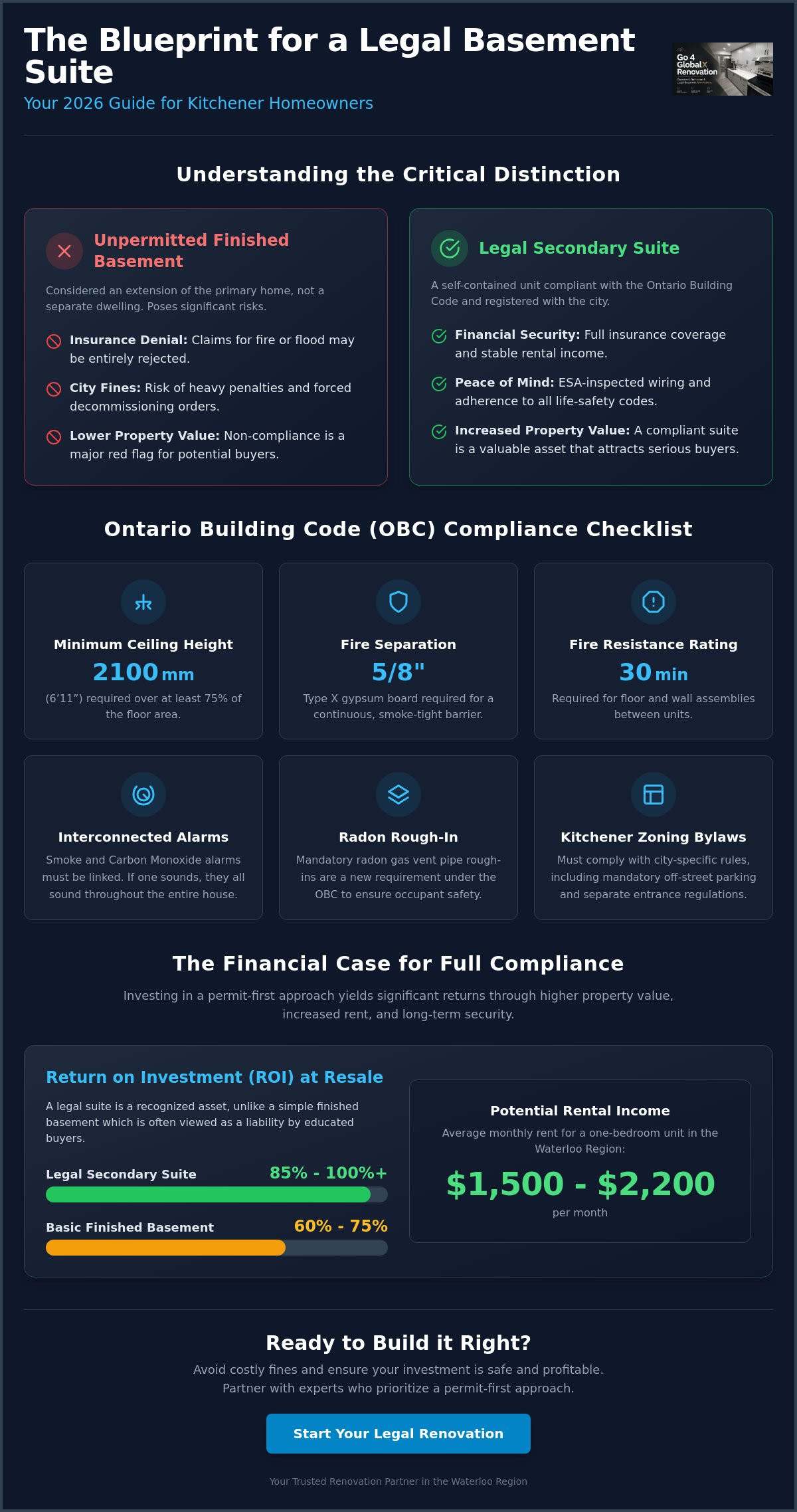
A legal secondary suite is far more than just a finished basement with a kitchenette. Under the Ontario Planning Act, it's defined as a self-contained dwelling unit that includes its own dedicated kitchen, bathroom, and sleeping area. To be considered compliant, the space must strictly adhere to the Ontario Building Code (OBC). Many homeowners confuse a "finished basement," which is essentially an extension of the primary living space, with a "legal dwelling unit" that meets specific life-safety standards. In 2026, pursuing a legal basement renovation Kitchener residents can trust is becoming the standard for those looking to offset mortgage costs with rental income, which currently averages between $1,500 and $2,200 for a one-bedroom unit in the region.
Choosing to bypass the permit process carries significant hidden risks. If a fire or flood occurs in an unpermitted suite, your insurance provider may deny the entire claim, leaving you personally liable for all damages. Additionally, the City of Kitchener can issue work orders that force you to decommission the suite entirely. This results in the loss of your renovation investment and all future rental revenue. We prioritize doing things correctly from the start to protect your property and your financial future.
The Legal vs. Illegal Suite Debate
Many property owners believe their basement is "grandfathered" because it has existed for decades. This is almost always a myth for modern Kitchener homes. Unless the suite was legally established with permits and registered with the city, it remains illegal. During a home inspection, non-permitted work is a massive red flag that can stall a sale or lead to significant price drops. Buyers in the Waterloo Region are increasingly savvy; they often request proof of municipal compliance before even making an offer.
Benefits of a Legal Conversion
Investing in a legal suite attracts higher-quality tenants who prioritize their own safety and the stability of their housing. You gain peace of mind knowing the Electrical Safety Authority (ESA) has inspected and passed all wiring, significantly reducing the risk of electrical fires. From a financial perspective, a legal suite offers a superior return on investment. While a basic finished basement might recover 60 to 75 percent of its cost, a fully compliant legal suite often recovers 85 to 100 percent through a combination of increased property appraisal and consistent monthly income.
Core Requirements of the Ontario Building Code (OBC)
Adhering to the Core Requirements of the Ontario Building Code is the most critical step in transitioning from a simple renovation to a certified secondary suite. These regulations aren't merely suggestions; they are enforceable life-safety standards designed to protect occupants in the event of an emergency. For a legal basement renovation Kitchener inspectors will verify several key structural elements, starting with minimum ceiling heights. To be considered a legal living space, the ceiling must be at least 2100mm (6’11”) high over at least 75 percent of the required floor area. If your basement has low-hanging ductwork or beams, these must be carefully planned to ensure they don't impede this mandatory clearance.
Fire safety is another non-negotiable pillar of the 2026 building code. Modern standards now require a continuous, smoke-tight barrier between the primary residence and the basement suite. This is typically achieved using 15.9mm (5/8") Type X gypsum board on the ceilings and shared walls. Unlike standard drywall, Type X is specially reinforced with glass fibres to provide superior fire resistance. Furthermore, all smoke and carbon monoxide alarms must be interconnected. If a sensor detects a threat in the basement, every alarm in the entire house must sound simultaneously. This ensures that all residents, regardless of which floor they are on, have the maximum time to evacuate safely.
Fire Safety and Soundproofing
Beyond the drywall itself, the OBC mandates a 30-minute fire resistance rating for floor and wall assemblies. This includes the installation of fire-stopping materials around any plumbing or electrical penetrations that cross between units. To prevent smoke from travelling through the HVAC system, fire duct dampers are often required. While you're addressing these safety layers, we often recommend high-density insulation like Safe’n’Sound. It provides the required fire resistance while significantly reducing noise transfer, ensuring a more private and professional living environment for your tenants.
Egress Windows and Natural Light
Every bedroom in a legal suite must have at least one egress window that provides a secondary means of escape. According to OBC 9.9.10.1, these windows must meet specific opening sizes to allow a person to climb through easily. Proper drainage is equally important; window wells must be equipped with adequate gravel and drainage tile to prevent water from pooling against the foundation during heavy Kitchener rainfalls. If you're unsure if your current windows meet these safety standards, our team can help you plan a compliant basement layout that prioritizes both light and safety.
Navigating Kitchener’s Zoning and Permit Process
Understanding the local regulatory landscape is the first step toward a successful project. In the City of Kitchener, the primary document governing your project is Zoning Bylaw 85-1. This bylaw classifies basement apartments as "Additional Dwelling Units" (ADUs). It outlines exactly where and how these suites can be built. Before you begin a legal basement renovation Kitchener officials must verify that your specific property is zoned to allow for a second unit. This zoning check prevents you from investing in a project that the city could later force you to stop.
Parking is a frequent hurdle for many homeowners. Under Bylaw 85-1, the city typically requires at least one dedicated off-street parking space for the secondary suite in addition to the parking required for the main dwelling. These spots must be accessible and comply with specific width and length requirements. Another critical factor is the entrance. While many believe a separate walk-out is mandatory, Kitchener often allows shared foyers as long as the fire separation standards we discussed previously are strictly maintained. We recommend reviewing the City of Kitchener building permit requirements early in your planning phase to confirm your lot's specific limitations.
The Permit Application Journey
You cannot simply submit hand-drawn sketches for a legal suite. The city requires professional architectural drawings prepared by a designer with a Building Code Identification Number (BCIN). Once these plans are ready, we file the application at the Kitchener City Hall building department. The process isn't over once the permit is issued. You'll need to pass three mandatory inspections: framing, plumbing, and a final inspection. These visits ensure that every structural and safety element matches the approved plans exactly.
Local Utilities and Capacity
Adding a second kitchen and bathroom places extra demand on your home's infrastructure. We always verify that your existing water and sewer lines can handle the increased load. Most older homes in the Waterloo Region have a 100-Amp electrical service, which is rarely sufficient for two independent dwelling units. We typically recommend upgrading to a 200-Amp service to ensure both you and your tenants can run appliances simultaneously without tripping breakers. Kitchener Hydro assesses each new secondary suite application to determine if the local transformer and service drop can support the additional electrical load for your property.
Budgeting and ROI for Waterloo Region Homeowners
Investing in a legal basement renovation Kitchener homeowners can take pride in requires a clear understanding of where your capital is allocated. While a standard basement finishing project focuses primarily on aesthetics, a legal conversion prioritizes life-safety systems and municipal compliance. Your budget will be divided into three main categories: administrative fees, professional design services, and construction materials. Administrative costs include City of Kitchener permit fees, which typically range between C$500 and C$2,000 depending on the project's complexity. You must also account for BCIN-certified architectural drawings, as these are mandatory for any legal suite application in the Waterloo Region.
The financial gap between "finishing" and "legalizing" exists because of the rigorous requirements of the 2026 Ontario Building Code. Legalizing a space involves installing expensive fire-rated materials, such as 15.9mm Type X gypsum board, and ensuring all smoke and carbon monoxide alarms are interconnected across both dwelling units. You may also need to invest in separate HVAC controls or fire dampers to meet smoke-tight standards. Despite these higher initial costs, the long-term financial benefits are substantial. As of 2026, the average monthly rent for a one-bedroom basement apartment in Kitchener-Waterloo ranges from C$1,500 to C$2,200. This consistent cash flow typically allows homeowners to reach a full payback on their investment within 4 to 7 years.
Maximizing Your Investment
To ensure the highest possible rental yield, we recommend selecting durable, tenant-proof materials that maintain a high-end appearance. Luxury Vinyl Plank (LVP) flooring is currently the most popular choice in the Waterloo Region because it's waterproof and incredibly resilient. Another high-value addition is a dedicated laundry room for the lower unit. Tenants are often willing to pay a premium for private laundry facilities, which significantly increases your monthly income and the overall appraised value of your property. If you're ready to start planning your financial strategy, you can request a detailed basement renovation quote to see how these choices impact your specific project.
Timeline Expectations
Patience is essential when navigating the municipal approval process. In Kitchener, the permit approval phase typically takes 4 to 6 weeks. Once the permit is in hand, the construction phase generally spans 8 to 10 weeks. The most critical period is the framing and rough-in phase, as this is when city inspectors verify your structural changes, plumbing, and electrical work before the walls are closed. The project concludes with a final inspection and the issuance of an "Occupancy Permit," which officially designates the space as a legal dwelling unit ready for a tenant.
Why Go 4 Global X is Your Kitchener Renovation Partner
Choosing the right contractor is the most significant decision you'll make for your property. We operate with a strict "Permit-First" philosophy because we believe that a legal basement renovation Kitchener homeowners invest in should never be built on a foundation of regulatory shortcuts. We don't start work until the City of Kitchener has reviewed our plans and issued the necessary building permits. This disciplined approach eliminates the risk of costly work orders or insurance denials, providing you with a safe, compliant, and high-value asset from day one.
Our team brings specialized expertise in the unique municipal codes of Kitchener, Waterloo, Cambridge, and Guelph. While the Ontario Building Code sets the provincial standard, each municipality has specific nuances regarding zoning bylaws and parking requirements. We've spent years navigating these local bureaucracies, which allows us to manage the administrative burden on your behalf. To ensure complete transparency, we provide fixed-price contracts. This prevents "budget creep" and ensures you have a dependable financial roadmap for your project. A dedicated project manager will oversee every phase, coordinating with the Electrical Safety Authority (ESA) and city inspectors so you don't have to manage the logistics yourself.
The Go 4 Global X Renovations Process
- Step 1: The free on-site estimate. We visit your property to evaluate ceiling heights, egress potential, and existing plumbing to determine your basement's true legal potential.
- Step 2: Professional design and permit coordination. Our team handles the BCIN-certified architectural drawings and manages all communications with local building departments.
- Step 3: Meticulous construction. We focus on the technical details that matter most, including fire separation, smoke-tight barriers, and structural integrity, ensuring your suite passes every inspection.
Start Your Legal Conversion Today
We realize that your home is your most valuable asset. Our goal is to help you unlock its full potential by creating a secondary suite that is 100% compliant with Ontario laws. Whether you're looking to generate rental income or provide a safe living space for family, we're here to guide you through every technical and legal requirement. Our commitment to the Waterloo Region and Oxford County communities is rooted in integrity and a "safe pair of hands" approach to craftsmanship. We prioritize doing things correctly over doing them quickly, ensuring your legal basement renovation Kitchener project delivers long-term security and value.
Book your free on-site estimate with Go 4 Global X Renovations
Secure Your Property's Future with a Compliant Secondary Suite
Converting your basement into a registered dwelling unit is one of the most effective ways to build wealth while providing essential housing in the Waterloo Region. By prioritizing the 2026 Ontario Building Code requirements and navigating local zoning bylaws correctly, you protect your household from liability and ensure your investment holds its value for decades. A successful project relies on meticulous planning, from fire-rated assemblies to the final occupancy permit.
As specialists in secondary suites serving Kitchener, Waterloo, and Cambridge, we provide full permit and code management to take the guesswork out of the process. We invite you to request your free legal basement consultation in Kitchener to discuss how we can bring your vision to life safely and professionally. Taking the first step toward a legal basement renovation Kitchener homeowners can trust ensures that your project is built on a foundation of integrity and expert craftsmanship. We look forward to helping you realize the full potential of your home.
Frequently Asked Questions
Is a separate entrance mandatory for a legal basement in Kitchener?
A separate exterior entrance is not strictly mandatory if you provide a safe, fire-separated common area or foyer that leads to both units. However, many homeowners choose to install a dedicated walk-out or side entrance to increase rental value and tenant privacy. If you opt for a shared entrance, the common space must be protected by specific fire-rated drywall and doors to meet the smoke-tight requirements of the current Ontario Building Code.
How much does it cost to legalize an existing basement apartment in Ontario?
The cost to legalize an existing suite depends entirely on how many safety gaps currently exist in the space. You'll need to budget for municipal permit fees, professional BCIN-certified drawings, and potential structural upgrades like egress windows or fire separation barriers. Since every property is unique, we recommend a professional assessment to identify which specific code requirements are missing before you begin your legal basement renovation Kitchener project.
What is the minimum ceiling height for a legal basement suite in Kitchener?
You must maintain a minimum ceiling height of 2100mm (6’11”) across at least 75 percent of the required floor area. This height is measured from the finished floor to the finished ceiling. While some obstructions like beams or ductwork can be lower, they must still allow for a safe and functional living environment that meets the inspector's approval during the final site visit.
Do I need a permit if I am only finishing my basement for personal use?
Yes, you are legally required to obtain a building permit even if the basement is only for your family's personal use. A permit ensures that the framing, electrical, and plumbing work meet provincial safety standards. This documentation is also vital for maintaining your home insurance coverage and will be a mandatory requirement if you decide to sell your property in the future.
How long does the City of Kitchener take to approve a basement apartment permit?
The City of Kitchener generally takes between 4 and 6 weeks to review and approve a basement permit application. This timeline depends on the completeness of your architectural drawings and the current volume of applications at City Hall. Working with a professional designer can often prevent delays by ensuring your plans meet all technical requirements on the very first submission.
Can I legalize a basement suite if my house only has a 100-amp electrical panel?
It's technically possible to fit the circuits, but a 100-amp panel is rarely sufficient for the simultaneous power demands of two modern households. Between two electric stoves, laundry machines, and air conditioning systems, you'll likely experience frequent breaker trips. We almost always recommend upgrading to a 200-amp service to ensure the safety and convenience of both the primary residents and the tenants.
What happens if I get caught with an illegal basement suite in the Waterloo Region?
If the city discovers an illegal suite, they can issue a work order requiring you to stop renting the space and decommission the unit. You may also face significant municipal fines and the immediate loss of your rental income. Most importantly, your insurance company can deny a claim if a fire or flood originates in an unpermitted unit, leaving you personally liable for all damages.
Does a legal basement renovation increase my property taxes in Kitchener?
A legal basement renovation will likely result in a modest increase in your property taxes because it increases the overall market value of your home. The Municipal Property Assessment Corporation (MPAC) will eventually adjust your assessment based on the added value of the finished space and the second dwelling unit. However, the additional rental income generated by a legal suite typically far outweighs the increase in your annual tax obligations.