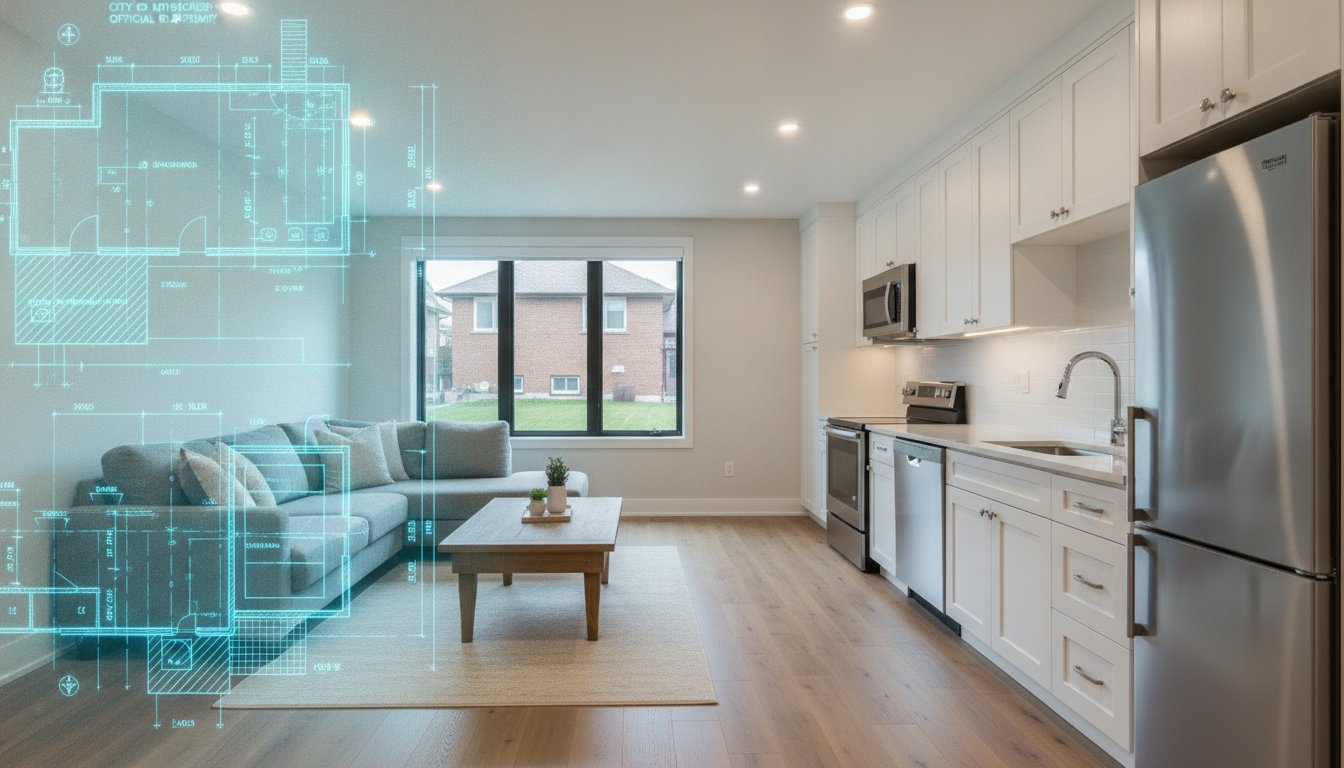
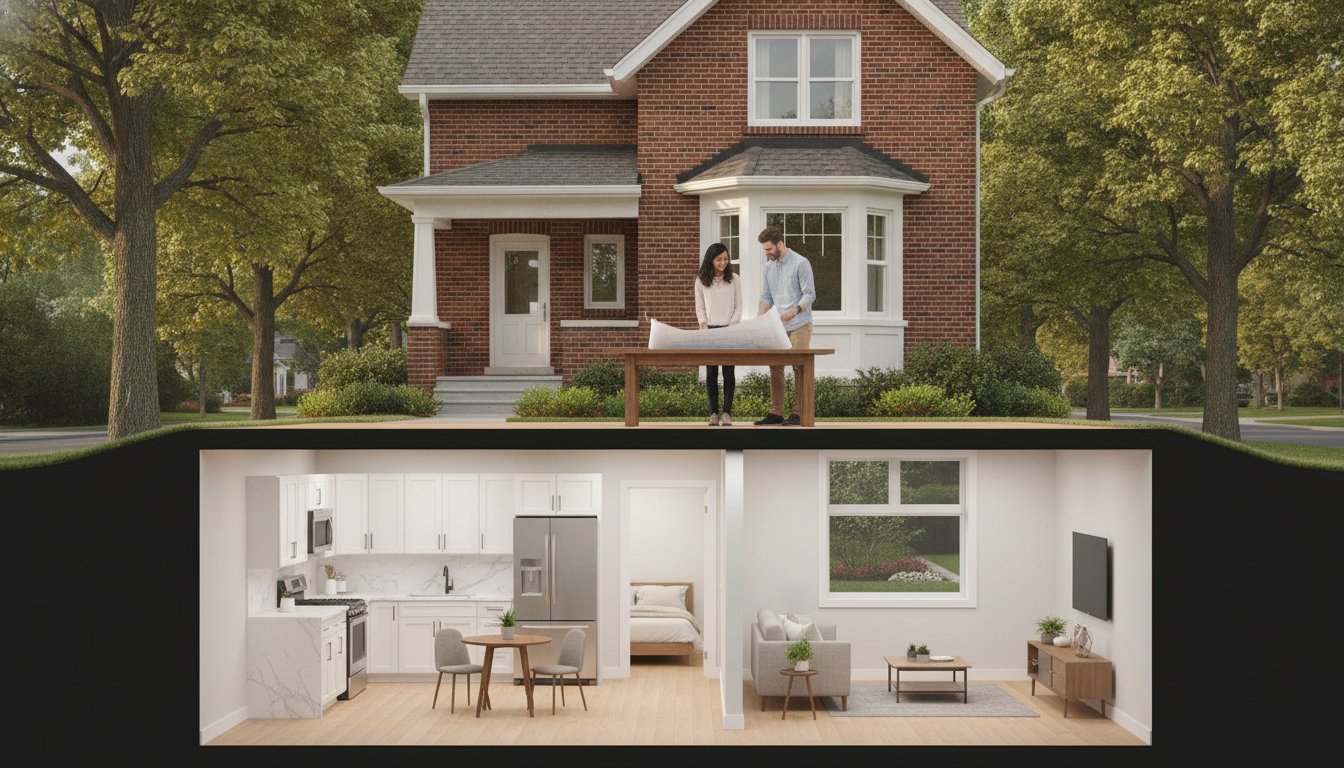
What if your Kitchener backyard or basement held the key to paying off your mortgage years ahead of schedule? With the city now allowing up to four dwelling units on many residential lots, the opportunity to scale your property value is greater than ever before. You've likely recognized that the timing is right to add rental unit to home Kitchener properties, yet you might be hesitant to start. The prospect of managing a 14-week construction timeline while adhering to strict municipal standards often creates more anxiety than excitement for most homeowners.
It's understandable to feel cautious when faced with the 2026 Ontario Building Code updates and the city's new Rental Renovation Licensing By-law. You deserve a project that is executed with precision, ensuring your investment is both legal and safe for your future tenants. This guide simplifies the transition by outlining the specific zoning rules, fire separation requirements, and permit steps necessary for a successful conversion. We'll explore everything from mandatory ceiling heights to the current ROI, providing a disciplined path toward a high-quality, rent-ready secondary suite.
Key Takeaways
- Understand how Kitchener’s expanded zoning bylaws now permit up to four dwelling units on many residential lots, providing a significant opportunity to increase property value.
- Identify the essential 2026 Ontario Building Code standards, including fire separation and ceiling height requirements, that transform a simple renovation into a legal, safe residence.
- Evaluate the financial and lifestyle benefits of different configurations to determine the most effective way to add rental unit to home Kitchener properties for your specific goals.
- Prepare for a structured construction journey by learning the 14-week timeline and the critical role professional permits play in avoiding municipal fines.
- Learn how to navigate the new Rental Renovation Licensing By-law with a partner who prioritizes transparent communication and local building expertise.
Understanding Kitchener’s ADU Zoning: Can You Add a Rental Unit?
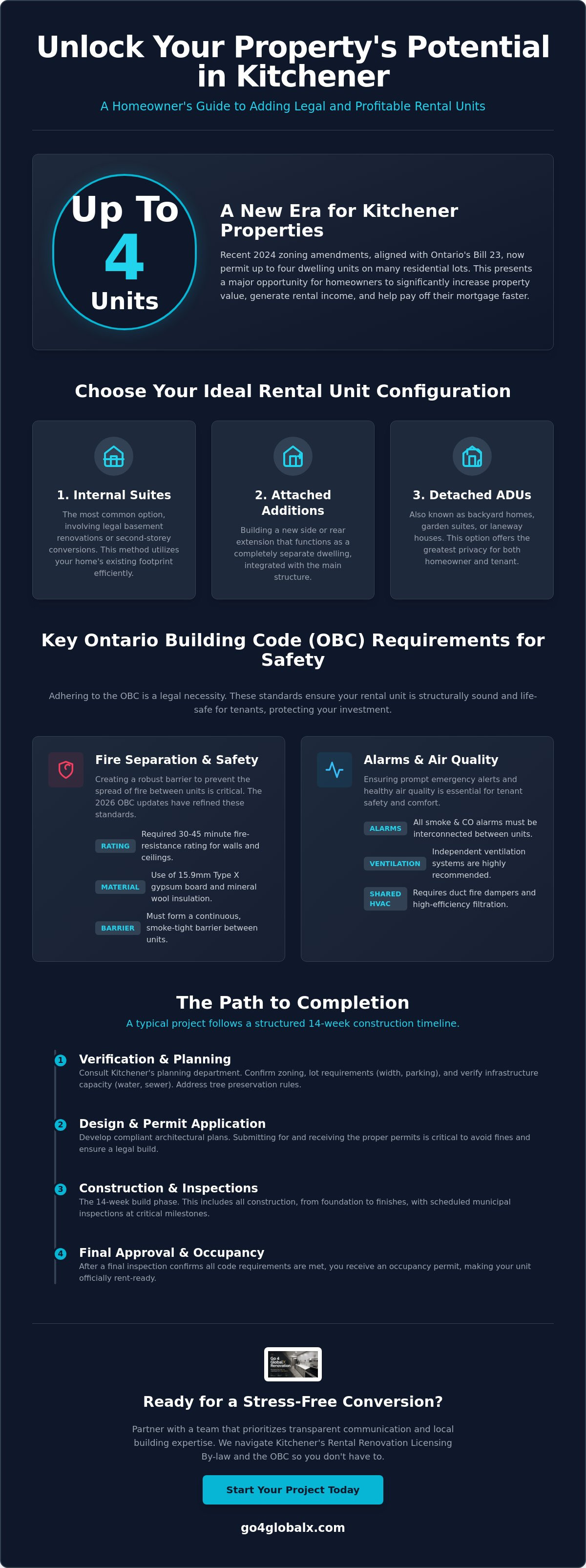
Kitchener's housing landscape changed significantly following the 2024 zoning amendments. These updates transformed the way local property owners view their land by allowing up to four dwelling units on many residential lots that were once restricted to a single detached home. This landmark shift aligns with Ontario’s Bill 23, also known as the More Homes Built Faster Act, which prioritizes density to help solve the housing crisis. For many, the decision to add rental unit to home Kitchener properties has moved from a distant dream to a viable financial strategy.
An Additional Dwelling Unit (ADU), often referred to as a Secondary suite, is a self-contained residence located on the same lot as the primary house. It must include its own kitchen, bathroom, and sleeping area. While the new rules are remarkably permissive, they aren't without boundaries. Every project must still respect lot-specific constraints. For example, your property's existing water and sewer infrastructure must be verified to ensure it can support the additional demand. If the municipal service lines are too small, upgrades may be required before you can legally proceed.
The Types of Rental Units Permitted in Kitchener
Kitchener allows for three primary configurations. Internal suites are the most common, involving legal basement renovations or second-storey conversions within the existing house footprint. Attached additions involve building a side or rear extension that functions as a separate dwelling. Finally, detached ADUs include backyard homes, garden suites, or laneway houses. Each option has unique implications for your property's layout and your construction budget. Choosing the right one depends on your lot size and how much privacy you wish to maintain.
Confirming Your Lot’s Eligibility for a Secondary Suite
Before starting any design work, you should consult the Kitchener City Hall planning department to confirm your specific zoning designation. Even if your lot allows for four units, you must still meet minimum lot width requirements and provide adequate parking. Kitchener’s bylaws are specific about driveway sizes and the number of stalls required per unit. Additionally, the Region of Waterloo maintains strict rules regarding tree preservation and site grading. If your project impacts a protected tree or changes how water flows across the lot, you'll need specialized approvals before a building permit is issued. Taking the time to verify these details early prevents costly delays during the construction phase.
Key Ontario Building Code Requirements for Legal Secondary Suites
The Ontario Building Code (OBC) serves as the primary standard for tenant safety across the province. It's a comprehensive framework designed to ensure that any renovation is structurally sound and life-safe. When you choose to add rental unit to home Kitchener properties, adhering to these regulations isn't merely a suggestion; it's a legal necessity that protects your investment from future liability. A compliant suite ensures that in the event of an emergency, occupants have the protection and escape routes they need.
Fire safety is perhaps the most critical component of the OBC. Traditionally, the code required specific 30-minute or 45-minute fire-resistance ratings for the walls and ceilings separating the units. Recent 2026 updates have refined these standards, often requiring a continuous, smoke-tight barrier using 15.9mm Type X gypsum board. This specialized material, combined with mineral wool insulation, creates a robust shield that prevents fire from spreading between the primary residence and the new suite. This extra layer of protection provides peace of mind for both the landlord and the tenant.
Air quality and alarm systems are equally vital. All smoke and carbon monoxide alarms must be interconnected so that an emergency in one unit triggers an alert in the other. To prevent the exchange of odours and airborne contaminants, the units should ideally have independent ventilation systems. If the units share a furnace, the installation of duct fire dampers and specific high-efficiency filtration is required to prevent air-sharing during a fire. You can consult with a specialist in legal basement renovations to determine which HVAC configuration is most cost-effective for your home's layout.
Ceiling Height and Structural Clearance
Vertical space is a common challenge in many Kitchener basements. The OBC requires a minimum ceiling height of 1.95 metres over at least 75% of the required floor area. As of 2026, the Ontario Building Code mandates a minimum ceiling height of 1.95 metres for legal secondary suites, with a permissible reduction to 1.85 metres under beams and stairs. If your current basement doesn't meet these heights, you may need to consider "digging out" the floor or underpinning the foundation to create a legal living space.
Egress Windows and Emergency Escape Routes
Every bedroom in a secondary suite must provide a safe way out in an emergency. According to the City of Kitchener ADU regulations, this requires an egress window with a clear opening of at least 0.35 square metres, with no single dimension being less than 380mm. These windows must stay open without additional support during an exit. If the window opens into a well, that well must extend at least 760mm from the wall to allow for easy passage. Furthermore, the suite needs a dedicated, unobstructed path leading directly to the street to ensure safe evacuation for all occupants.
Comparing Basement Apartments vs. Garden Suites in Kitchener
Deciding on the best way to add rental unit to home Kitchener residents often find themselves choosing between internal renovations and detached builds. Each path offers distinct advantages depending on your lot size and financial goals. While a basement suite is often the most accessible entry point, a garden suite represents a premium addition that can fundamentally change the utility of your property. Understanding the nuances of these options ensures your investment aligns with your long-term vision for the home.
Utility connections remain a primary hurdle for detached units, especially in established Kitchener neighbourhoods. Unlike a basement suite that shares the existing house's plumbing and electrical service, a garden suite may require new trenching for water and sewer lines. This process must strictly follow the Ontario Building Code standards for depth and insulation to prevent freezing during Waterloo Region winters. These infrastructure costs can be substantial; however, they are often offset by the higher market value of a standalone dwelling.
Property taxes will inevitably rise with the addition of any legal unit, but the impact varies. A basement apartment is typically viewed as a finished basement for assessment purposes, whereas a garden suite is treated as a secondary dwelling. However, the resale value for properties with detached ADUs has seen a steady climb. Buyers in the Kitchener-Waterloo tech corridor often prioritize these units for multi-generational living or as a dedicated home office. This makes the decision to add rental unit to home Kitchener a strategic move for long-term equity growth.
Basement Conversions: The Practical Choice
Basement renovations are often the fastest way to begin generating rental income. By utilizing the existing foundation and framing, you can organize your budget to focus on high-quality finishes rather than structural shells. Proper moisture management and professional insulation are essential here. A well-executed basement suite provides a warm, dry environment that feels like a primary living space rather than a secondary one.
Garden Suites and Backyard Homes: The Premium Option
Garden suites tap into the growing demand for "tiny home" living in the Waterloo Region. These detached structures offer superior privacy for both the homeowner and the tenant, making them highly desirable in the rental market. While you must navigate complex site plan approvals and tree protection zones, the effort is often rewarded with significantly higher monthly rents. They are a sophisticated solution for maximizing a large lot's potential.
The Construction Journey: From Permit Approval to Final Inspection
Transforming your property is a methodical process that typically spans a 4 to 14 week timeline. This journey begins with a clear plan and ends with a legal, rent-ready space. During this period, our primary role is to act as your protective guide, managing every interaction with the City of Kitchener building department. We handle the logistical heavy lifting, from scheduling inspections to ensuring that every structural change aligns with your approved drawings. Choosing to add rental unit to home Kitchener properties requires this level of professional oversight to ensure the project remains on track and fully compliant with local bylaws.
Living in a home during a major renovation can be daunting. We prioritize a clean and safe job site by implementing strict dust control measures and maintaining organized work zones. Our team adheres to predictable schedules to minimize disruption to your daily routine. Throughout the project, a sequence of city inspections occurs at critical milestones: framing, plumbing, electrical, and insulation. Each visit from a city official serves as a verified checkmark that your project is moving forward correctly and safely. If you are ready to begin this process, you can learn more about our secondary suites services to see how we manage these complex timelines for local homeowners.
The Permit and Design Phase
Professional drawings are the foundation of a successful permit application. Without precise architectural plans, applications often stall at the permit office, leading to costly delays. We also address "hidden" requirements that many homeowners overlook, such as site grading plans or arborist reports required for tree protection in the Waterloo Region. Go 4 Global X streamlines this entire application phase, ensuring all technical documents are submitted correctly the first time to accelerate your approval.
Demolition and Structural Rough-ins
The first few weeks involve heavy construction as we modernize your home’s core systems. We ensure your electrical and plumbing infrastructure is robust enough to support multiple independent units safely. A successful plumbing rough-in inspection is a mandatory milestone that confirms all drainage and supply lines meet provincial standards before they are concealed behind drywall. This stage is vital for the long-term integrity and legal compliance of your suite, preventing future maintenance headaches.
Finishing and Final Certification
The final phase sees the construction zone transform into a polished living space. We focus on durable, high-quality finishes that can withstand the rigours of the Kitchener rental market while maintaining a modern aesthetic. Once the work is complete, we coordinate the final inspection to obtain your occupancy permit. This document is the final piece of the puzzle, officially legalizing your unit and allowing you to welcome your first tenants with total confidence in your property's value.
Partnering with Go 4 Global X Renovations for a Stress-Free Conversion
Choosing the right partner for your renovation is the most critical decision you'll make in this process. At Go 4 Global X Renovations, we position ourselves as a grounded and dependable authority in an industry that is often fraught with uncertainty. We understand that the decision to add rental unit to home Kitchener properties is a significant financial commitment. Our approach is rooted in integrity, prioritizing long-term safety and structural quality over quick, temporary fixes. We act as a steady, rule-following partner who understands the intricate local bureaucracy of the Waterloo Region and Oxford County.
Transparency is the foundation of our client relationships. We move away from vague verbal quotes, opting instead for a detailed estimate approach that ensures budget clarity from the outset. This methodical pacing allows you to understand exactly where your investment is going, from the initial structural rough-ins to the final high-quality finishes. By providing a clear roadmap of costs and timelines, we alleviate the typical anxieties homeowners face regarding project management. You can rely on our local expertise to ensure your secondary suite is a "safe pair of hands" project that meets every provincial standard.
Our Full-Service Approach to Secondary Suites
Our team manages every phase of the construction journey internally. This includes everything from the initial framing and drywall to sophisticated master bathroom renovations within the new unit. We handle the coordination of every permit and building code requirement, allowing you to focus on your future as a landlord rather than the technical minutiae of the Ontario Building Code. We have a proven track record of delivering finished spaces that don't just meet legal standards but also significantly increase the overall market value of the property.
Ready to Add a Rental Unit to Your Home?
If you're ready to transform your property into a legal multi-unit home, the first step is a thorough assessment of your site's potential. We offer a professional consultation to evaluate your home’s structural layout, utility capacity, and zoning eligibility. This process ensures that your project is feasible before any major investment is made. We invite you to Book your free on-site estimate with Go 4 Global X Renovations today to begin your journey toward a legal, rent-ready secondary suite in Kitchener or Waterloo. Our disciplined approach ensures your renovation is completed correctly the first time, providing you with a reliable source of income for years to come.
Secure Your Property's Future with a Professional Conversion
Kitchener's evolving zoning laws and the 2026 Ontario Building Code updates have created a unique opportunity for homeowners to maximize their land's potential. Whether you opt for a practical basement suite or a premium garden home, success depends on meticulous planning and a strict adherence to safety standards. Navigating fire separation requirements and municipal permit timelines is essential to building long-term equity and avoiding costly non-compliance fines. The decision to add rental unit to home Kitchener properties is one of the most strategic financial moves you can make this year.
Go 4 Global X Renovations has been serving Kitchener, Waterloo, and Cambridge for years, bringing deep expertise in Ontario Building Code compliance to every project. We provide full permit and project management, acting as your steady guide through every city inspection. If you're ready to transform your house into a legal multi-unit investment, Get a Free On-Site Estimate for Your Kitchener Rental Unit Conversion today. Building a legal secondary suite is a complex journey, but with a disciplined partner, your property can become a safe and reliable source of income.
Frequently Asked Questions
Is a secondary suite legal in Kitchener in 2026?
Yes, secondary suites are legal in Kitchener in 2026. The city's 2024 zoning amendments permit up to four dwelling units on most residential lots that were previously restricted to single detached homes. This change allows homeowners to add rental unit to home Kitchener properties through basement apartments, additions, or detached garden suites, provided the project meets the Ontario Building Code and local municipal bylaws.
How much does it cost to add a rental unit to my home in the Waterloo Region?
The cost to add a rental unit in the Waterloo Region depends on the scope of work and the existing condition of your property. Converting an unfinished basement into a legal suite involves different structural requirements than building a detached garden suite from the ground up. Factors such as plumbing rough-ins, electrical upgrades, and high-quality finishes will influence the final investment needed to create a safe, rent-ready space.
Do I need a separate entrance for a legal basement apartment in Ontario?
Ontario Building Code regulations typically require a dedicated means of egress for secondary suites to ensure tenant safety. While a shared vestibule is sometimes permissible if it meets specific fire separation and smoke-tight standards, most homeowners prefer a completely separate entrance for both legal compliance and privacy. A direct exit to the outside ensures that occupants can evacuate safely without passing through the primary residence during an emergency.
How long does the permit process take for a basement conversion in Kitchener?
The permit process for a basement conversion in Kitchener typically takes between four and eight weeks for the city to review and approve the application. This timeline can vary depending on the complexity of your design and whether additional documents, like grading plans or arborist reports, are required. Working with a professional who handles the entire application process ensures that your technical drawings are accurate, which prevents unnecessary delays at City Hall.
Can I add a garden suite if I already have a basement apartment?
Yes, you can often add a garden suite even if your home already contains a legal basement apartment. Under the current zoning framework, the City of Kitchener allows a combination of internal units and detached structures, up to a maximum of four units per lot. However, you must still adhere to lot coverage limits, parking requirements, and minimum side-yard setbacks to ensure the detached unit is legally compliant with add rental unit to home Kitchener regulations.
What happens if I rent out an illegal basement suite in Kitchener?
Renting an illegal suite carries significant risks, including substantial municipal fines and the potential for your insurance provider to deny claims. If the city discovers a non-compliant unit, they can issue an order to comply, which may involve expensive retroactive renovations or the complete decommissioning of the suite. Investing in a legal conversion from the start protects your property value and ensures the safety of your tenants.
Does adding a rental unit increase my property taxes in Ontario?
Adding a legal rental unit generally leads to an increase in your property taxes because the assessed value of your home increases. The Municipal Property Assessment Corporation (MPAC) will eventually reassess your property to reflect the additional living space and income potential. While your annual taxes will rise, the monthly rental income generated by the new suite typically far outweighs the increase in tax obligations.
What are the fire separation requirements for a duplex in Kitchener?
Fire separation requirements for a duplex in Kitchener involve creating a continuous, smoke-tight barrier between the units. As of the 2026 Ontario Building Code updates, this often requires the use of 15.9mm Type X gypsum board on shared walls and ceilings. This specialized construction, paired with interconnected smoke and carbon monoxide alarms, provides the necessary protection to ensure that fire cannot easily spread from one dwelling to another.